Signs of Autism in Toddlers: Age-by-Age Red Flags and Gentle Next Steps
Noticing possible signs of autism in toddlers can feel confusing because toddler behavior changes quickly. A child may avoid eye contact one week, cling the next, and suddenly learn a new word after weeks of quiet. The goal is not to label a child from one habit. It is to notice patterns across social connection, communication, play, movement, sensory responses, and daily routines. If you are also reflecting on autism traits in older family members, autism traits self-reflection tools can support private learning for adults and teens, while toddler concerns are best discussed with a pediatric professional or early intervention team.

What Counts as a Sign of Autism in Toddlers?
A sign is a repeated pattern, not a single odd moment. Many toddlers spin, hum, bite, scream, line up toys, refuse foods, or walk on tiptoes at times. These behaviors become more meaningful when they appear often, are hard to redirect, limit daily life, or appear alongside differences in social communication.
The early signs parents often notice fall into three broad areas:
- Social connection: limited response to name, little shared smiling, reduced back-and-forth play, or seeming more interested in objects than people.
- Communication: delayed speech, fewer gestures, limited pointing, little imitation, or using another person's hand as a tool.
- Repetition and sensory patterns: intense routines, repetitive movements, unusual reactions to sound or texture, or very focused play with parts of toys.
Autism can look different from child to child. Some toddlers are quiet and withdrawn. Others are active, affectionate, and verbal, but still struggle with flexible play, shared attention, or changes in routine.
Signs of Autism in Toddlers by Age
Age matters because a concern at 15 months may look different from a concern at 4 years. The list below is educational, not a checklist that settles the question.
Signs of autism in toddlers age 1
Around 12-18 months, parents may notice that a child rarely responds to their name, does not point to show interest, uses few gestures, or does not look back and forth between an object and a caregiver. Some toddlers do not imitate clapping, waving, or simple sounds. Others seem content to play alone for long periods and may not bring objects to share.
At this age, loss of skills matters. If a child used words, gestures, or social routines and then stops using them, it is worth asking for professional guidance promptly.
Signs of autism in toddlers age 2
By age 2, common red flags include very limited pretend play, few two-word phrases, limited interest in other children, strong distress with routine changes, or repetitive play that is hard to interrupt. A child may repeat sounds, watch spinning objects closely, line up toys instead of using them in flexible play, or have intense reactions to everyday sounds.
For families trying to understand broader autism traits across the household, Asperger's and autism traits resources can offer context for adults and teens. For a 2-year-old, however, the practical next step is a pediatric conversation, developmental screening, or early intervention referral.
Signs of autism in toddlers age 3
At age 3, social differences may become clearer because group play is more visible. A child may play next to peers without much shared play, repeat favorite scripts, resist transitions, or have trouble using language for back-and-forth conversation. Some children speak in long phrases but use them mainly to request, label, or repeat rather than to share ideas.
Meltdowns at this age can come from many causes. Look for the pattern around them: sensory overload, unexpected changes, waiting, clothing textures, crowded rooms, or difficulty explaining needs.
Signs of autism in toddlers age 4
By age 4, signs may include narrow interests, difficulty joining imaginative play, literal interpretation of language, strong preference for sameness, or unusual sensory seeking. Some children know many facts or words but struggle to adjust play to another child's idea. Others may avoid noisy play spaces, cover their ears, or become upset by small changes in routes, cups, foods, or bedtime routines.
Signs of autism in toddlers age 5
At age 5, the word "toddler" no longer quite fits, but many parents search this way when preparing for school. Concerns may include trouble with flexible peer play, difficulty following group directions, intense distress during transitions, limited emotional language, or repeated conflicts that come from missed social cues. A school readiness conversation may be useful, especially if patterns show up at home, preschool, and community settings.
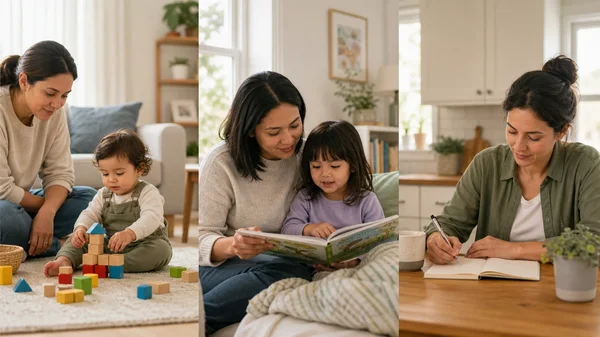
Social Communication Red Flags Parents Often Notice First
The first signs of autism in a toddler are often about shared attention. Shared attention means the child notices something interesting and includes another person in that moment. Examples include pointing to a plane, looking back to see if you saw it too, bringing a toy to show you, or copying a silly sound.
Possible red flags include:
- Not consistently responding to name when hearing is not the issue
- Rarely pointing to show interest
- Limited eye contact during shared play, not just during demands
- Little imitation of gestures, sounds, or facial expressions
- Limited back-and-forth games such as peekaboo, rolling a ball, or turn-taking songs
- Using words mainly to request, with less language for sharing, commenting, or pretending
Some toddlers make eye contact with familiar people but not during shared attention. Others are affectionate at bedtime yet struggle in play. That is why context matters. Autism signs are usually patterns across moments, not one missing behavior.
Repetitive, Sensory, and Movement Signs
Many searches ask whether walking on tiptoes, biting, humming, spinning, or screaming is a sign of autism in toddlers. The careful answer is: it can be part of the picture, but it is not enough by itself.
Tiptoe walking can appear in autistic toddlers, but it can also relate to habit, tight muscles, sensory seeking, or other developmental questions. Spinning may be playful, especially in a young toddler, but repeated spinning that replaces other play or is difficult to interrupt is more notable. Humming can be self-soothing, a sound experiment, or a sensory pattern. Biting and screaming may reflect frustration, communication difficulty, pain, fatigue, or overwhelm.
What makes these signs more meaningful is clustering. For example, a toddler who often walks on tiptoes, rarely responds to name, has limited gestures, lines up toys, and melts down with routine changes deserves closer attention than a toddler who briefly toe-walks while laughing during a game.
Uncommon signs of autism in toddlers may include unusual fascination with lights, shadows, wheels, strings, water, or small object parts; distress over tiny changes; very selective eating related to texture; or a strong need to repeat the same route, phrase, or sequence.
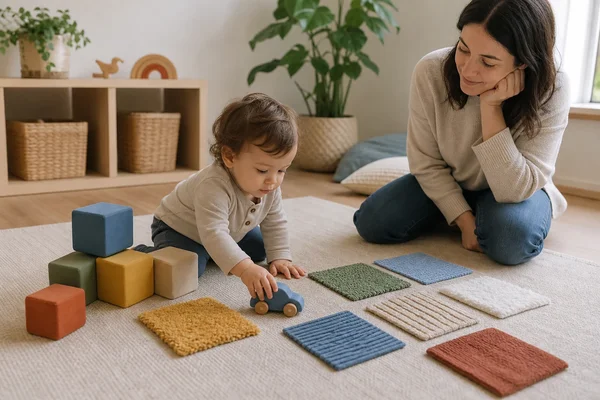
Signs of Mild Autism or Level 1 Autism in Toddlers
Parents often search for signs of mild autism in toddlers or signs of level 1 autism in toddlers because the child seems close to typical in many situations. Some people also search for "high-functioning autism," although many autistic people prefer more specific language about support needs.
Lower-support-needs autism in a toddler may look subtle. The child may speak early or have strong memory, but conversation is one-sided. They may enjoy adults more than peers because adults adjust more easily. They may be affectionate but become overwhelmed by noise, clothing, transitions, or changes in plans. Pretend play may exist, yet stay repetitive: the same scene, same lines, same order.
This is also where comparison can mislead parents. A toddler can be bright, loving, verbal, and autistic. A toddler can also have speech delay, anxiety, hearing issues, sleep problems, or temperament differences without being autistic. The useful question is not "Does this one trait prove autism?" It is "Do several traits keep appearing across settings, and does my child need more support?"
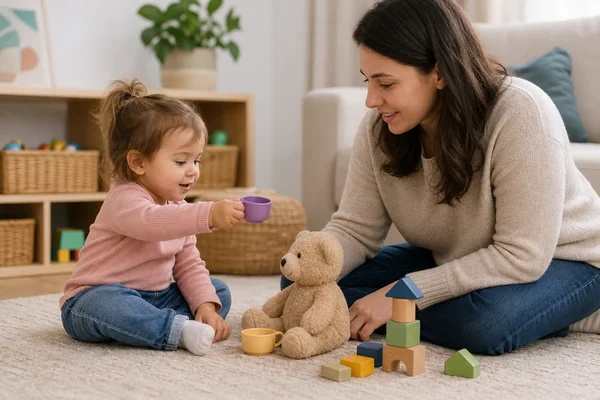
A Practical Parent Checklist Before You Call
If you are unsure, create a simple two-week observation log. You do not need perfect notes. You need enough detail to make the conversation clearer.
Track:
- Response to name in quiet and busy settings
- Pointing, waving, showing, bringing, and imitation
- How your child asks for help or comfort
- Pretend play and flexible play with people
- Repetitive movements, sounds, or play patterns
- Sensory reactions to sound, light, touch, clothing, food, or crowds
- Triggers before biting, screaming, running away, or meltdowns
- Any skills that appeared and then faded
Bring short videos if you have them. A two-minute clip of play, transition distress, or communication attempts can be more useful than trying to remember every detail during an appointment.
You can also write three plain-language questions:
- Which milestones should we check for this age?
- Should we request a developmental screening or early intervention review?
- What can we do at home while we wait for the next appointment?

What to Do Next If You Notice a Pattern
If several signs of autism in toddlers appear together, consider asking your child's pediatric professional about developmental screening, hearing checks, speech-language support, occupational therapy questions, or local early intervention options. You do not have to wait until every concern is obvious. Early support can help with communication, routines, sensory needs, and family stress even while the bigger picture is still being understood.
Keep the tone around your child warm and practical. The purpose of noticing signs is not to judge a toddler's personality. It is to understand what helps them connect, communicate, play, sleep, eat, transition, and feel safe in daily life.
If you are a parent noticing familiar traits in yourself while researching your child, a gentle traits exploration space may help you reflect on your own patterns as an adult or teen. For your toddler, use those reflections as context, not as an answer. The most helpful next step is a calm, specific conversation with someone trained in child development.
FAQ
What are the first signs of autism in a toddler?
The first signs often involve shared attention and communication. A toddler may not respond consistently to their name, may rarely point to show interest, may use few gestures, may not imitate simple actions, or may not bring objects to share. Some children also show repetitive play, strong sensory reactions, or loss of earlier communication skills.
What are red flags for autism in a 2 year old?
Red flags at age 2 can include few spoken words or limited two-word phrases, little pretend play, limited interest in other children, repetitive movements or play, intense distress with routine changes, and difficulty using gestures or words to share attention. A cluster of signs matters more than one behavior alone.
How can I tell if my 2 year old has high functioning autism?
The phrase "high functioning" can hide real support needs, so it is more useful to look at specific patterns. A 2-year-old may have many strengths and still struggle with shared attention, flexible play, sensory overwhelm, transitions, or back-and-forth communication. A developmental professional can help sort out what support would be useful.
What are the top 3 signs of autism in toddlers?
Three common early signs are limited shared attention, delayed or unusual communication, and repetitive or highly restricted play patterns. Examples include not pointing to show interest, not responding to name, using fewer gestures, repeating the same play sequence, or reacting strongly to changes in routine.
Is walking on tiptoes a sign of autism in toddlers?
Walking on tiptoes can appear in autistic toddlers, but it can also happen for other reasons. It becomes more important when it is frequent, persistent, or appears with communication differences, sensory sensitivities, repetitive play, or strong resistance to change.
Are biting, humming, spinning, or screaming signs of autism?
They can be part of a broader autism pattern, but each can also happen for many toddler reasons. Look at frequency, triggers, recovery time, and whether the behavior appears with social communication differences, sensory overload, repetitive play, or limited flexible communication.
Are Reddit stories useful for signs of autism in toddlers?
Reddit can help parents feel less alone and notice questions they may want to ask, but stories from other families cannot settle what is happening for your child. Use them as prompts for observation, then bring your own examples to a pediatric or early intervention conversation.