How Many Levels of Autism Are There? DSM-5 Autism Levels Explained
If you have searched "how many levels of autism are there," the clearest answer is: in the DSM-5 framework, there are three autism support levels. Level 1 means "requires support," Level 2 means "requires substantial support," and Level 3 means "requires very substantial support." These levels are not a ranking of intelligence, value, personality, or future potential. They are a shorthand for how much support a person may need with social communication, flexibility, sensory needs, daily routines, and restricted or repetitive patterns of behavior. If you are exploring traits for yourself or someone you care about, an autism traits self-screening context can be a gentle place to organize observations before discussing concerns with a qualified professional.
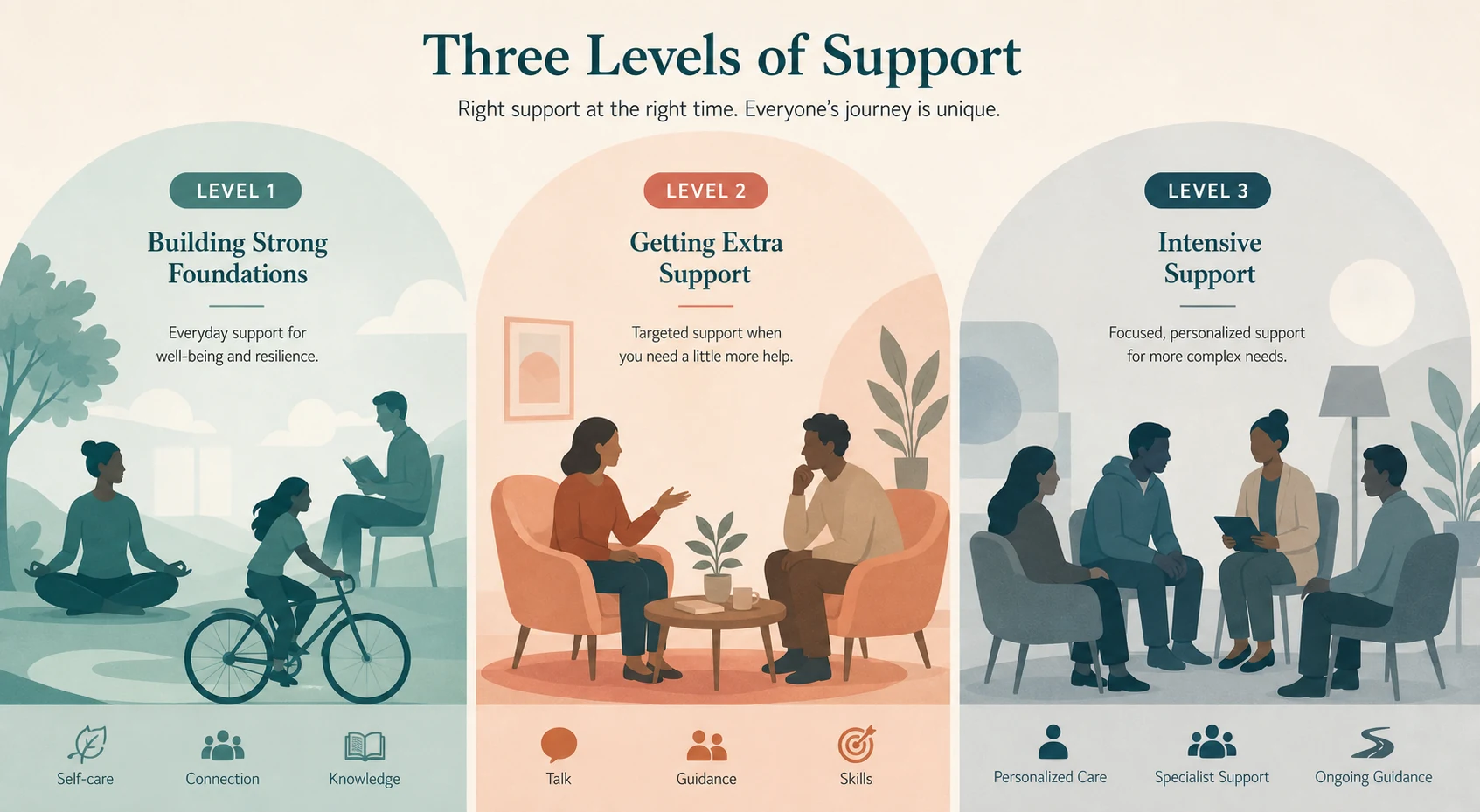
Why People Ask About 3, 4, or 5 Levels of Autism
Search results can feel confusing because people use several different frameworks at once. Some pages talk about "types of autism," older terms such as Asperger's syndrome, informal phrases like "high-functioning autism," and DSM-5 support levels as if they were the same thing. They are related, but they are not identical.
The current DSM-5 support-level framework uses three levels. That is why the best answer to "how many levels of autism spectrum disorder are there" or "how many levels of autism are there DSM-5" is three. The levels are assigned in relation to support needs, not as a complete biography of a person.
Questions such as "what are the 5 levels of autism" usually come from mixed information online. Some writers may blend severity levels with developmental stages, school support tiers, social communication profiles, or older autism categories. That does not mean there are five official DSM-5 autism levels. Likewise, "autism level 4 symptoms" is not part of the DSM-5 level system. If someone uses "level 4," ask what framework they mean.
The 3 Autism Levels in Simple Terms
The three levels describe how much support a person may need in two broad areas: social communication and restricted, repetitive behaviors. A person may not fit perfectly into a tidy box, and support needs can shift across home, school, work, relationships, sensory environments, and stress levels.
Level 1 Autism: Requires Support
Level 1 autism is often associated with lower visible support needs, but "lower visible" does not mean "easy." A person with Level 1 autism may speak fluently, study or work independently, and still find social timing, unspoken expectations, transitions, sensory overload, or executive function demands exhausting.
Common Level 1 autism symptoms and traits may include difficulty with back-and-forth conversation, challenges reading social cues, strong preference for routine, intense interests, sensory sensitivity, or trouble shifting from one task to another. Adults may also have years of masking, which can make their support needs less obvious to others while still affecting energy, anxiety, and daily functioning.
Support at this level may include clearer communication, predictable routines, workplace or school accommodations, social coaching, sensory adjustments, therapy focused on coping skills, and more compassionate self-understanding.

Autism Level 2: Requires Substantial Support
Autism Level 2 usually means support needs are more noticeable and more consistent across daily life. Social communication differences may make conversation, peer interaction, classroom participation, workplace demands, or family routines harder to manage without structured help.
What does Level 2 autism look like? It might involve limited back-and-forth conversation, use of short phrases, difficulty initiating social interaction, strong distress when routines change, sensory needs that interfere with daily plans, or repetitive behaviors that are harder to redirect. Some people at Level 2 speak; some use alternative or augmentative communication; some use a mix depending on the situation.
Is Level 2 autism high-functioning? That phrase is not very helpful. A person may have strong skills in one area and substantial support needs in another. "High-functioning" can hide real challenges, while "low-functioning" can hide strengths. Level 2 is better understood as a support-needs description, not a judgment about ability.
For readers sorting through observations, a structured autism traits reflection may help gather patterns in communication, flexibility, and sensory experiences before a professional conversation.
Level 3 Autism: Requires Very Substantial Support
Level 3 autism is the highest DSM-5 support level. It often involves very substantial support needs in communication, daily routines, flexibility, safety, sensory regulation, and participation in school, home, or community settings.
Is Level 3 autism the most severe? In the DSM-5 support-level system, Level 3 indicates the greatest support needs. But "most severe" can sound as if it describes the whole person, and that is too narrow. Someone at Level 3 may communicate differently, need frequent help with daily activities, rely on consistent routines, or use communication supports. They may also have preferences, humor, relationships, strengths, and ways of connecting that deserve respect.
Support may involve coordinated care, communication tools, caregiver training, sensory planning, educational supports, occupational therapy, speech-language support, behavioral supports, and medical or mental-health care when relevant.
How Many Levels of Autism Are There in Adults?
There are still three autism support levels in adults. The DSM-5 levels are not only for children. However, adult presentation can be harder to interpret because life experience changes what others see.
An adult may have learned scripts for conversation, built a career around strong interests, avoided overwhelming environments, or developed routines that reduce visible stress. That can make Level 1 traits look subtle from the outside. Another adult may need substantial help with daily living, communication, planning, or sensory regulation and may fit Level 2 or Level 3 support needs.
Adult support needs can also vary by setting. Someone may appear confident in a predictable work role but struggle deeply with unexpected schedule changes, noisy social events, burnout, or complex relationships. This is why autism levels should be discussed with context, not used as a single-word identity summary.
How Autism Levels Differ From Older Autism Types
Before DSM-5, people often heard separate labels such as Asperger's disorder, autistic disorder, and pervasive developmental disorder not otherwise specified. DSM-5 folded these into autism spectrum disorder, while adding support-level specifiers.
That change matters because "types" can sound fixed, while the spectrum model recognizes variation. Two people with the same level may have very different profiles. One person may need help mainly with social communication and sensory overload. Another may need help with flexible thinking, self-care routines, or communication access. The level gives a support estimate, not a full map.
This is also why "level 1 autism" should not be treated as "mild autism" in a dismissive way. A person may be articulate and still have serious support needs in hidden areas. Likewise, Level 3 should not erase individuality or strengths.
A Practical Comparison of Autism Level 1, Level 2, and Level 3
The table below is a simplified educational guide. It is not a substitute for formal clinical assessment.
| DSM-5 Level | Support phrase | What it may involve | Support examples |
|---|---|---|---|
| Level 1 autism | Requires support | Social communication may be difficult; routines, sensory needs, or transitions may affect daily life | Clear expectations, sensory planning, social support, therapy, school or workplace accommodations |
| Autism Level 2 | Requires substantial support | Communication and flexibility needs are more noticeable; changes or sensory triggers may be harder to manage | Structured routines, speech-language support, occupational therapy, family or classroom plans, communication tools |
| Level 3 autism | Requires very substantial support | Communication, daily living, sensory regulation, and change management may need frequent support | Highly individualized care, communication access, caregiver support, safety planning, intensive educational or therapeutic support |
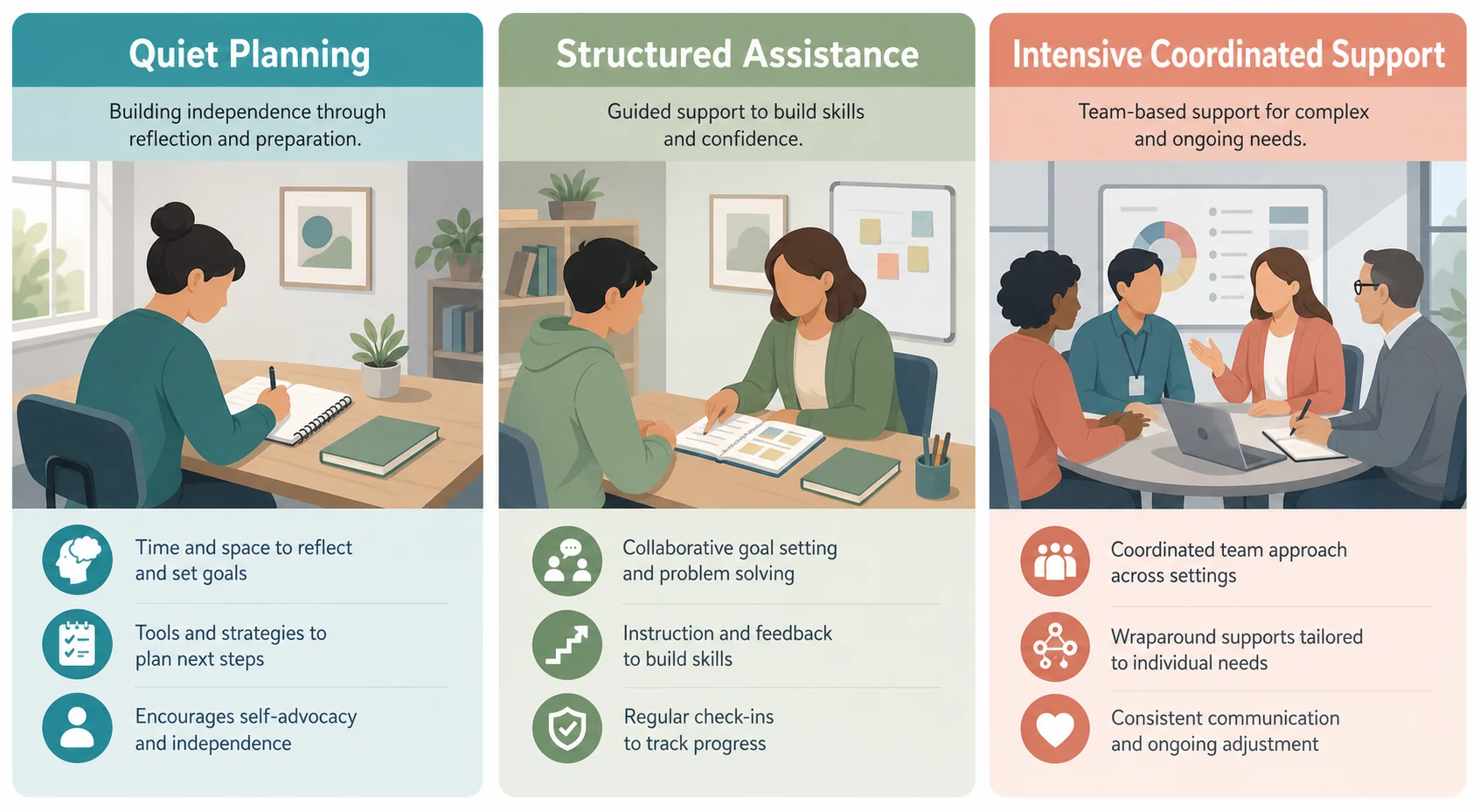
What Autism Levels Can and Cannot Tell You
Autism levels can be useful when they guide support. They can help families, schools, clinicians, and adults ask better questions: What helps communication? What makes transitions easier? What sensory changes reduce overload? What daily-living supports are needed? What strengths should support plans build around?
But levels cannot tell you everything. They do not measure intelligence. They do not predict kindness, creativity, relationships, employment, or independence on their own. They do not explain co-occurring ADHD, anxiety, intellectual disability, language differences, sleep issues, or sensory processing patterns. They also do not capture masking, burnout, trauma history, culture, family support, or access to services.
That is why a support level should be treated as one piece of information. The more useful question is not only "What level is this?" but also "What support helps this person participate, communicate, recover, learn, and feel safe?"
Use Autism Levels as a Starting Point, Not a Label
So, how many levels of autism are there? In the DSM-5 support-level framework, there are three. The common online searches about five levels or Level 4 symptoms usually reflect confusion between official support levels, older autism categories, and informal descriptions.
If this topic connects with your own experiences, try writing down practical observations: communication patterns, sensory triggers, routines that help, transitions that are hard, social settings that drain energy, and strengths that others may miss. For a low-pressure starting place, AspergersTest.me offers autism and Asperger traits exploration tools designed for reflection and education. Use any online result as a conversation starter, not as a final answer, especially when support decisions, school planning, workplace accommodations, or health concerns are involved.

FAQ
What are the 5 levels of autism?
There are not five DSM-5 autism support levels. The DSM-5 framework uses three: Level 1, Level 2, and Level 3. If you see five levels online, the writer may be mixing autism levels with older categories, developmental descriptions, or support tiers from another setting.
What is the max level of autism?
Within the DSM-5 support-level framework, the highest level is Level 3, which means "requires very substantial support." It describes support needs, not a person's worth, intelligence, or potential.
Are there autism level 4 symptoms?
Autism Level 4 is not part of the DSM-5 support-level system. Searches for "autism level 4 symptoms" usually reflect confusion from unofficial frameworks. For DSM-5 support levels, the system stops at Level 3.
Do Level 2 autistic kids talk?
Some Level 2 autistic children talk, some use short phrases, some use communication devices, and some use more than one communication method. Speech alone does not define the level. The level is about overall support needs in communication, flexibility, sensory regulation, and daily life.
Is Level 2 autism high-functioning?
"High-functioning" is an imprecise label. Level 2 means substantial support is needed. A person may have strong abilities in some areas and significant needs in others, so it is usually more respectful and useful to describe the specific supports that help.
Is Level 3 autism the most severe?
Level 3 indicates the greatest support needs in the DSM-5 level framework. However, it should not be used to reduce a person to a severity label. People at Level 3 still have preferences, strengths, relationships, and communication that should be understood with care.
How many levels of autism are there in children?
There are three DSM-5 support levels for children as well: Level 1, Level 2, and Level 3. Children's support needs may change as they grow, enter new environments, or receive support, so the level should be interpreted alongside a full developmental and daily-life picture.