Autism Brain Differences What Research Really Shows
Searches for "autism brain" often come from a very human question: is an autistic brain built differently, and what does that mean for daily life? The short answer is yes, research has found many brain-related differences associated with autism, but those differences are complex, varied, and not visible in the same way for every person. A scan or study finding cannot explain someone's whole personality, support needs, strengths, or future. If you are exploring your own traits, a private AQ-style autism traits reflection can help organize observations before a professional conversation, but brain research should be read as education rather than a personal verdict.
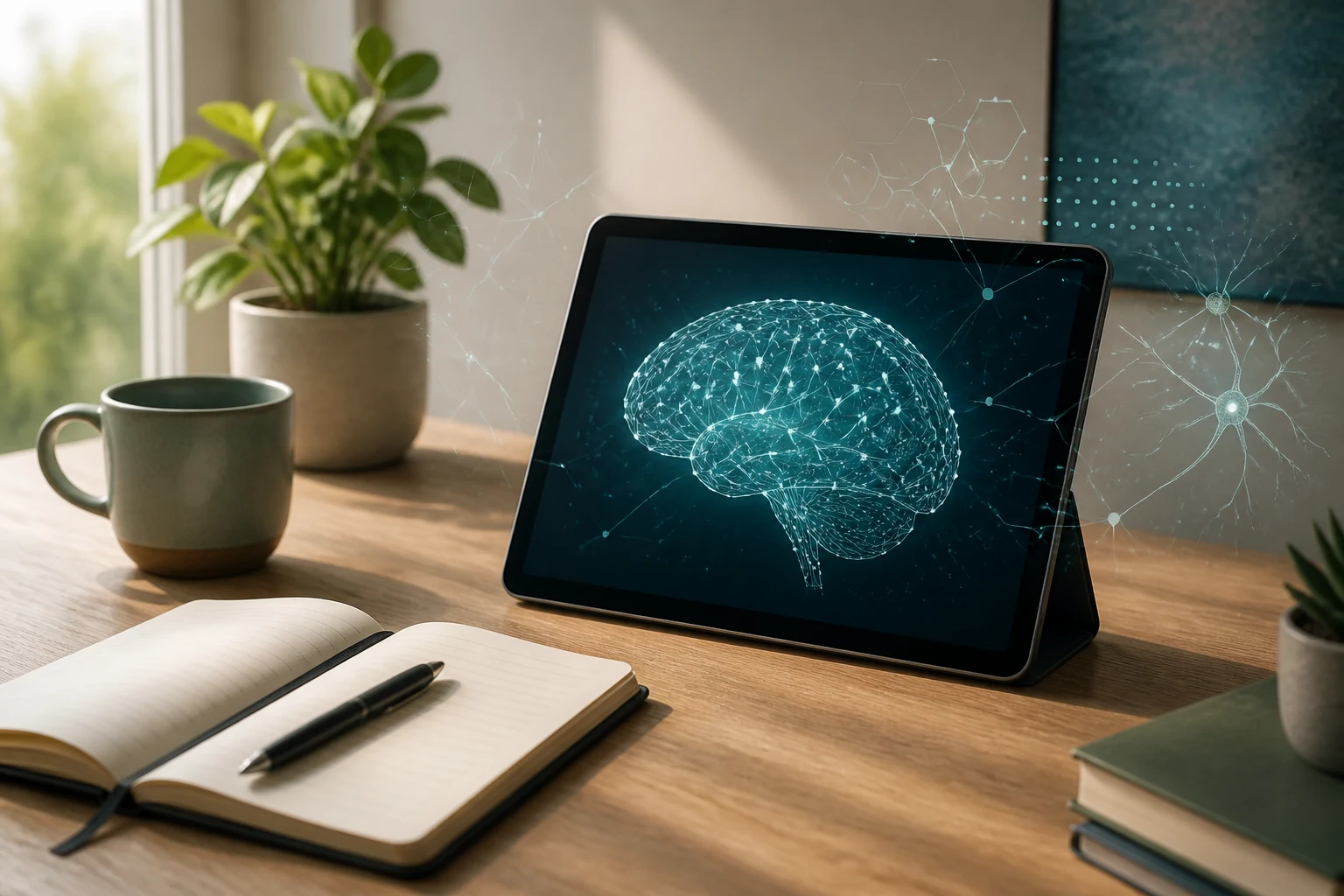
How the Autism Brain Can Differ
Autism is usually described as a neurodevelopmental condition, which means it relates to how the nervous system develops and processes information. Researchers study the autism brain through many lenses: brain growth patterns, communication between brain networks, sensory processing, synapses, genetics, and behavior. No single feature explains all autistic people because autism is a spectrum, not one narrow brain type.
Some studies have found differences in how brain regions coordinate with one another. Others focus on the balance between local processing and broader network integration. In everyday language, that may help explain why some autistic people notice fine details quickly, rely on routines, experience sensory input intensely, or need more time to switch attention. These are not flaws in character. They are possible expressions of a nervous system that organizes information differently.
It is also important to avoid the phrase "autism brain vs normal brain" as if there are only two categories. Neurotypical brains vary widely too. A more accurate comparison is between patterns seen more often in autistic groups and patterns seen more often in non-autistic comparison groups. Group patterns can be scientifically useful while still being imperfect for describing one individual.
Autism Brain Development Starts Early
Autism is not something a person catches later in life. The strongest scientific view is that autism reflects early developmental pathways shaped by genetics and other biological or environmental influences. Many signs are noticed in early childhood, although some people, especially those with subtle traits or strong masking strategies, are recognized much later.
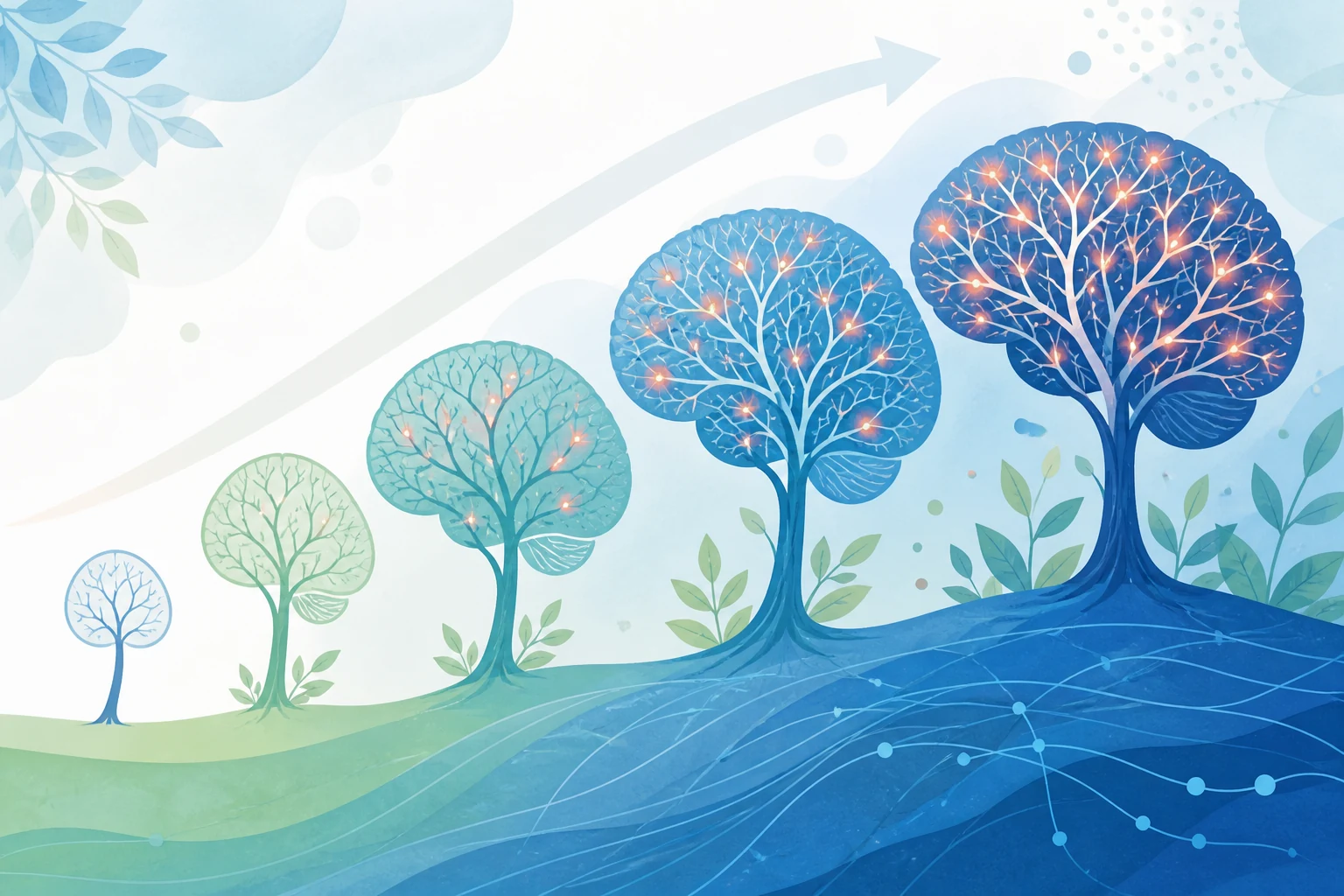
Brain development is dynamic. During childhood and adolescence, the brain builds, strengthens, trims, and reorganizes connections. Research has explored early differences in growth, cortical organization, and communication among brain systems. These findings do not mean there is a simple timeline where one change "creates" autism. Instead, autism appears to emerge from many interacting influences that affect development over time.
This is why claims about one single autism cause are usually too simple. Family history, certain genetic conditions, very low birth weight, and parental age have all been discussed as risk factors, but risk is not destiny. A person may have one risk factor and not be autistic, while another may be autistic without a clearly known cause. The useful question is not blame. It is what supports help someone communicate, learn, regulate sensory input, and participate in life with less friction.
What Brain Scans Can and Cannot Show
Search terms such as "autism brain scan vs normal" and "high-functioning autism brain scan" can make brain imaging sound more decisive than it currently is for individuals. MRI can show anatomy and some patterns of brain structure. Functional MRI can study activity and connectivity while someone rests or completes a task. PET imaging can examine specific biological processes, such as synaptic density, when a study is designed for that purpose.
These tools are powerful in research, but they are not a simple personal answer key. A brain scan is not usually used by itself to determine whether someone is autistic. Two autistic people can have different scan findings, and some autistic and non-autistic people can overlap on the same measure. Imaging is better understood as a way to study mechanisms and subgroups, not a standalone identity label.
Recent research on synapses is a good example of both promise and caution. Synapses are the junctions where nerve cells communicate. A study can find a meaningful average difference in a carefully selected group and still leave many questions open: whether the difference appears the same across ages, support needs, co-occurring conditions, and life experiences; how it relates to behavior; and whether it can guide practical support. Good science often adds nuance before it adds certainty.
Autism Brain vs ADHD Brain
Autism and ADHD are both neurodevelopmental conditions, and they can co-occur. That overlap is one reason many people search for "autism brain vs ADHD brain." Both can involve attention, executive function, sensory regulation, and daily routine challenges, but the patterns are not identical.
Autism is commonly associated with social communication differences, preference for predictability, focused interests, sensory differences, and repetitive behaviors or routines. ADHD is commonly associated with attention regulation, impulsivity, activity level, working memory, and task initiation. In real life, a person may have traits from both profiles, which can make self-understanding feel messy.
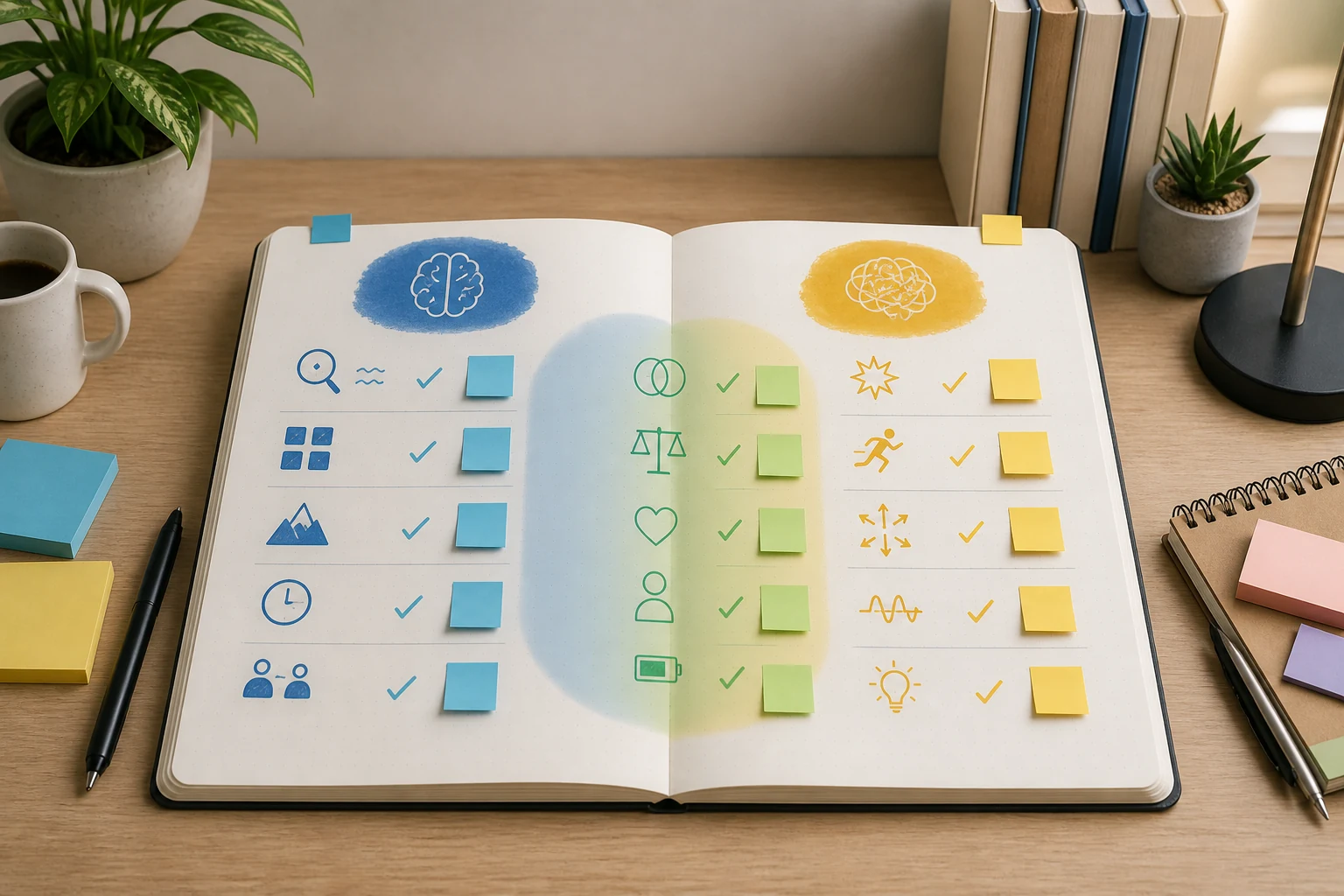
Brain research reflects that complexity. Studies may point to differences in networks involved in attention, reward, social processing, prediction, or sensory integration, but no scan neatly separates every autistic person from every person with ADHD. For readers trying to understand themselves, it is usually more practical to track lived patterns: What drains you? What helps you focus? What social situations are confusing? What sensory inputs become too much? A structured autism traits exploration tool can support that reflection, especially when paired with notes about attention and daily functioning.
Why "High-Functioning Autism Brain" Is an Imperfect Phrase
"High-functioning autism brain" is a common search phrase, but it can hide more than it reveals. Functioning labels often reduce a person to how they appear from the outside. Someone who speaks fluently, works, studies, or masks discomfort may still experience intense sensory overload, social exhaustion, shutdowns, anxiety, or executive-function barriers. Another person with higher support needs may have strengths that are missed when the conversation focuses only on limitations.
Level 1 autism in adults is often associated with lower visible support needs than Levels 2 or 3, yet that does not mean support is unnecessary. Adults may have spent years building scripts, routines, and coping systems. The brain does not become "less autistic" because someone has learned to pass through certain environments. The better question is what kind of support, communication style, sensory environment, and recovery time make life more workable.
For SEO searches, it is fine to explain the phrase people use. For respectful understanding, it is better to talk about traits, context, and support needs. Brain differences should never be used to rank people by worth, intelligence, empathy, or potential.
How Autism Brain Differences May Feel in Daily Life
Brain research becomes more useful when it connects carefully to lived experience. A person does not need to know their synaptic density or connectivity profile to notice that fluorescent lights feel painful, small talk requires conscious calculation, transitions are hard, or deep focus can feel easier than flexible multitasking.
Common daily-life patterns can include sensory sensitivity, sensory seeking, difficulty filtering background input, strong recognition of details, preference for direct communication, intense interests, and a need for predictable routines. These patterns vary. Some autistic people are highly verbal; others communicate partly or fully without speech. Some seek social connection but find common social rules confusing or tiring. Some thrive with visual schedules, noise reduction, written instructions, or extra processing time.
An "autism brain" article should not turn these experiences into stereotypes. The same trait can be a strength in one setting and a barrier in another. Detail focus may support technical work, art, research, or pattern recognition, while also making chaotic environments exhausting. Routine may look rigid from the outside, but from the inside it may reduce uncertainty and free up energy.
What Causes Autism in the Brain
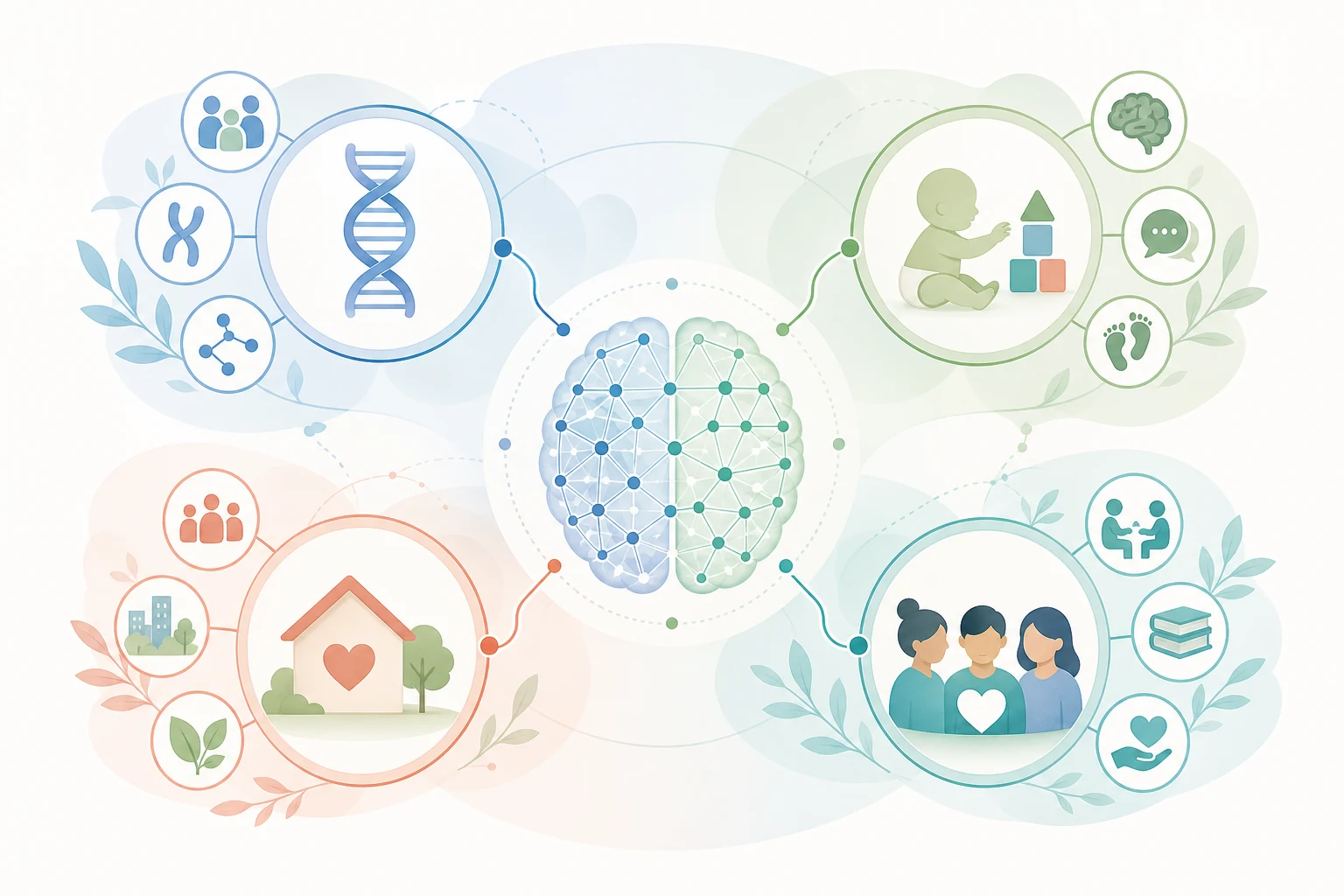
Many people ask what causes autism in the brain, but the most responsible answer is that there is no single known cause. Autism appears to involve many developmental pathways. Genes are important, and research continues to explore how genetic differences affect brain development, synaptic function, and neural communication. Environmental and biological factors may also influence likelihood, especially when they interact with genetic vulnerability.
This does not mean parenting style causes autism. It also does not mean a person became autistic by choice, personality, or attitude. Autism is not a disease in the usual sense of an infection or short-term illness. It is better understood as a lifelong neurodevelopmental difference with a wide range of support needs and life outcomes.
Support can still matter a great deal. Communication supports, sensory accommodations, educational planning, occupational therapy, mental health care, and community understanding can improve quality of life. The goal is not to erase a person's neurology. The goal is to reduce barriers, protect well-being, and help the person use their strengths.
A Practical Way to Read Autism Brain Research
When you see a headline about the autism brain, pause before applying it directly to yourself or someone you love. Ask five questions:
- Was the study done with children, adults, or both?
- How many people were included?
- Did the study include people with different support needs?
- Is the finding about a group average or individual prediction?
- Does the article explain limitations, or does it sound too certain?
These questions help you separate useful science from overreach. They also protect against shame. Brain differences do not make a person broken. They give researchers clues about development and give individuals another language for understanding needs.
If you are exploring your own traits, combine research with lived evidence. Write down sensory patterns, communication needs, routines that help, situations that drain energy, and examples from school, work, relationships, or childhood. Then bring those notes to a qualified professional if you want deeper evaluation or support planning.
From Brain Science to Self-Understanding
The best use of autism brain research is not to reduce people to scans, labels, or averages. It is to support clearer, kinder explanations of real experiences. If a person has always felt out of step with common social pacing, sensory expectations, or flexible routines, learning about neurodevelopment can make those experiences feel less mysterious.
AspergersTest.me fits into that early reflection stage. Its structured traits reflection can help adults and teens organize observations about social communication, routines, sensory patterns, and daily-life impact. It should not replace professional advice, and it is not meant for children under 13. Used carefully, it can be a low-pressure bridge between "Why do I experience things this way?" and "What support or next conversation would actually help?"
Autism brain differences are real, but they are not a complete biography. A person is more than a scan, a score, or a search result. The most respectful path is to combine science, self-observation, professional guidance when needed, and practical support in the places where life actually happens.

FAQ
Is the autistic brain different?
Yes, research has found brain-related differences associated with autism, including patterns involving development, connectivity, sensory processing, and synaptic communication. However, there is no single brain feature shared by every autistic person. Group findings can teach researchers a lot, but they should not be treated as a complete explanation of one individual.
What does an autism brain scan show?
A scan may show brain anatomy, activity, connectivity, or specific biological signals depending on the imaging method. In research, scans can help scientists study autism mechanisms. For one person, a scan usually cannot provide a simple yes-or-no answer about autism, because autistic and non-autistic people can overlap on many measures.
Is there a clear autism brain vs normal brain difference?
There are meaningful group differences in some studies, but "normal brain" is not a precise category. Human brains vary widely. It is more accurate to say that certain developmental and network patterns appear more often in autistic groups than in comparison groups, while individual brains still differ greatly.
What is the difference between an autism brain and an ADHD brain?
Autism and ADHD can overlap in attention, sensory regulation, and executive-function challenges, and some people have both. Autism is more centered on social communication differences, routines, sensory patterns, and restricted or intense interests. ADHD is more centered on attention regulation, impulsivity, activity level, and task initiation. Brain research supports overlap and distinction, but lived patterns remain important.
What does high-functioning autism mean?
"High-functioning" is an older, imperfect phrase often used for autistic people who have fluent speech or lower visible support needs. It can miss hidden effort, sensory overload, burnout, and support needs. Many people prefer more specific language, such as Level 1 autism, low visible support needs, or a direct description of strengths and challenges.
What are characteristics of Level 1 autism in adults?
Level 1 autism in adults may involve social communication differences, strong routines, sensory sensitivity, focused interests, direct communication preferences, or difficulty with rapid transitions. Some adults mask these traits for years. Support needs may be real even when they are not obvious to others.
Does profound autism affect life expectancy?
Life expectancy is influenced by many factors, including co-occurring medical conditions, intellectual disability, epilepsy, accidents, mental health, communication access, and quality of care. It should not be reduced to a single "autism brain" feature. People with higher support needs benefit from coordinated medical, communication, safety, and daily-living support.
Can autism develop after birth?
Autism is generally understood as a neurodevelopmental condition with roots in early brain development. Traits may become more noticeable as social, sensory, or school demands increase, and some people are recognized later in childhood or adulthood. That later recognition does not mean autism suddenly appeared from nowhere.