Asperger's Workplace Accommodations: Career Success Guide
You may have recently completed an aspergers test and gained fresh insights into your neurodivergent traits. This is often a powerful moment of self-discovery. But for many adults, the very next question is: How does this change my professional life? Navigating a career while managing Asperger's involves a unique set of challenges, but it also opens doors to extraordinary opportunities.
How can I make my workplace work for me? This guide is designed to help you transform your assessment results into a practical career strategy. Understanding your neurodivergent profile is the first step toward building a sustainable and successful professional life. By learning about specific accommodations, you can move from merely surviving at work to truly thriving.
The modern workplace is slowly changing to value neurodiversity. Whether you are currently employed or looking for a new role, knowing your strengths and needs is vital. We encourage you to start your test if you haven't already, as having a clear profile of your traits is the foundation for everything we will discuss in this guide.
How Your Asperger’s Test Results Define Career Success
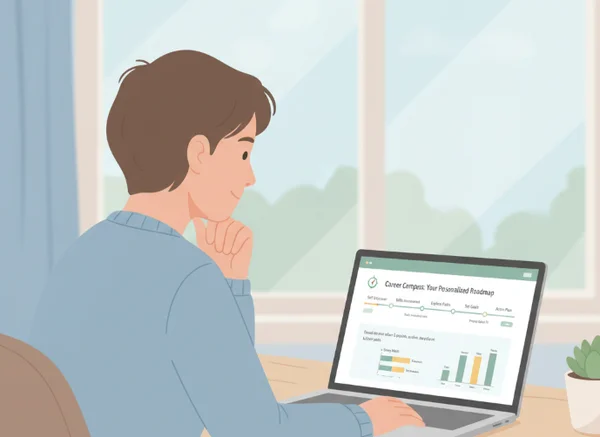
Taking an online aspergers test provides a baseline of data about how your brain processes the world. In a clinical or personal setting, these results help with self-awareness. However, in a professional setting, these results act as a roadmap. They help you identify why certain tasks feel effortless while others leave you feeling completely drained by the end of the day.
Your results likely highlight specific areas such as sensory sensitivity, social communication styles, and cognitive patterns. Instead of viewing these as "symptoms," think of them as functional characteristics. When you view your results through a career lens, you can begin to design a work environment that minimizes stress and maximizes your unique cognitive output.
How Sensory Processing Affects Workplace Performance
Many individuals with Asperger's experience sensory processing differences. In a busy office, these can become significant barriers to productivity. Fluorescent lighting. Refrigerator hums. Endless chatter in open offices. For many with Asperger’s, these aren’t distractions – they’re focus killers. This mental static in chaotic offices isn't just a minor annoyance; it can actually impact your ability to focus and complete complex tasks.
If your test results indicated high sensory sensitivity, you might notice that you perform better in quiet, controlled environments. Common workplace challenges include:
- Unexpected loud noises or background music.
- Strong smells from a breakroom or a colleague’s perfume.
- Visual clutter in open-plan office layouts.
Understanding these triggers allows you to seek specific aspergers workplace accommodations. For example, wearing noise-canceling headphones or requesting a desk in a low-traffic area can significantly boost your output. When you see your results and identify these sensitivities, you can present them to your employer as technical requirements for your best performance.
Translating Social Communication Patterns into Professional Strengths
Social communication is often cited as a challenge for those on the spectrum, but it can actually be a major professional asset. Individuals with Asperger's often favor direct, honest, and logical communication. In many industries—such as software development, legal research, and engineering—this "no-nonsense" approach is highly valued. It reduces ambiguity and ensures that projects stay on track.
Stop forcing "neurotypical" social habits. Your direct communication style? It’s a career asset in fields like coding or legal work. Professional strengths often include:
- High levels of integrity and transparency in reporting.
- The ability to provide objective feedback without being swayed by office politics.
- Exceptional clarity in written documentation and technical manuals.
By recognizing these patterns, you can seek roles that reward clear communication rather than "small talk." If you are unsure where you stand on the social communication spectrum, you can Take Our Asperger’s Workplace Readiness Assessment to get a detailed breakdown of your social traits.
Requesting Reasonable Accommodations at Work
Requesting accommodations can feel intimidating, but it is a standard part of modern professional life. An accommodation is simply a modification to a task, environment, or the way things are usually done. These changes help you perform your job duties effectively. It is not about asking for "special treatment"; it is about creating an equitable environment where you can contribute your full potential.
Preparation is key to a successful request. Before speaking with your manager or HR department, it helps to have your thoughts organized. Having a clear understanding of your needs—perhaps backed by the insights from an adult aspergers test—gives you the confidence to explain exactly what you need and why it benefits the company.
ADA Compliance and Your Rights as a Neurodiverse Employee
In the United States, the Americans with Disabilities Act (ADA) protects employees from discrimination and entitles them to "reasonable accommodations." Many other countries have similar legislation, such as the Equality Act in the UK. These laws recognize that neurodivergent conditions, including Asperger's, fall under protected categories.
Knowing your legal rights builds authority. When negotiating accommodations, clarity matters. Example: "The ADA requires adjustments like quiet workspaces – here’s how that supports my productivity." You don't always need to disclose a full medical diagnosis to receive help, but being informed about the law ensures you are treated fairly. For more detailed insights into your specific profile, you can get your report to help articulate your needs.
Examples of Legally Protected Asperger’s Accommodations
You have the right to request changes that do not cause "undue hardship" for your employer. Common reasonable accommodations include:
- Flexible working hours or the ability to work from home.
- Modified desk locations to reduce sensory input and mental static.
- Receiving instructions in writing rather than just verbally.
- Permission to use fidget tools or noise-canceling headphones.
Scripts for Disclosing Your Neurodivergence to Employers
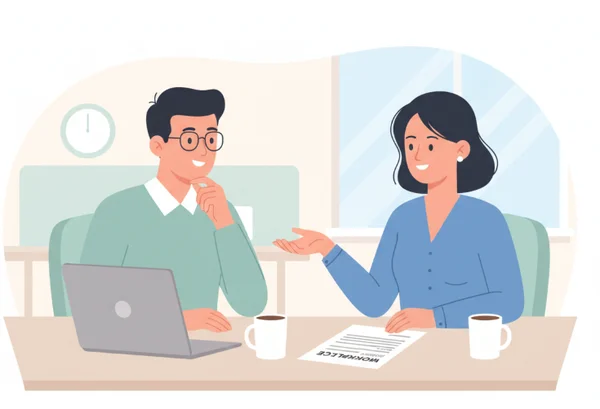
Disclosure is a personal choice. You are not legally required to tell your employer about your Asperger's unless you are requesting accommodations. If you decide to disclose, using a prepared script can reduce anxiety. The goal is to focus on solutions rather than problems.
Here is a simple template you can adapt: "I wanted to discuss some ways I can be even more productive in my role. I have a neurodivergent profile—specifically Asperger's—which means I process information very logically. I've found that I work best when I have written instructions for tasks. Would it be possible to follow up our weekly meetings with a brief email summary? This will help me ensure I meet every requirement perfectly."
Notice how this script frames the request as a way to "be even more productive." It highlights a strength (logical processing) and offers a simple solution (written instructions). This approach makes it easy for a manager to say yes.
Leveraging Asperger's Strengths in Your Career
The narrative around Asperger's is often focused on what an individual cannot do. However, the most successful neurodivergent professionals focus on what they can do better than anyone else. Many of the world’s most innovative thinkers and "disruptors" have traits associated with the autism spectrum. When you align your career with your natural cognitive style, your traits become a competitive advantage.
Careers Where Attention to Detail Becomes Your Superpower
One of the most common traits found in an asperger syndrome test is a high capacity for "systemizing." This is the drive to analyze, explore, and build systems. Whether it is a computer program, a legal brief, or a complex piece of machinery, people with Asperger's often see patterns that others miss.
Careers that frequently benefit from these traits include:
- Data Analysis and Programming: Where precision and pattern recognition are essential.
- Quality Assurance (QA): Where the ability to spot tiny errors is a primary job function.
- Accounting and Actuarial Science: Where a deep focus on numbers and rules is required.
- Scientific Research: Where intense interests lead to groundbreaking discoveries.
If you find yourself becoming "obsessed" with a specific topic, that isn't a distraction—it is a superpower. It allows you to become a subject matter expert faster than your peers. You can test yourself to see how your specific focus levels compare to others on the spectrum.

Building Professional Relationships with Authentic Communication
Socializing in the workplace doesn't have to follow the traditional "water cooler" model. Authentic communication means being honest about your social battery and your preferences. You can build strong professional relationships based on mutual respect and shared goals rather than social performance.
To build these relationships, try these strategies:
- Be clear about your needs: "I'm going to skip the loud happy hour, but I'd love to grab coffee one-on-one to discuss our project."
- Use your strengths in writing: If you find verbal networking difficult, become the person who sends the most helpful, insightful emails or LinkedIn messages.
- Find common interests: Many neurodivergent people bond over "info-dumping" about shared hobbies or work projects. Use these shared interests to bridge the social gap.
By being yourself, you attract colleagues who value your genuine contributions. You don't have to be the most "popular" person in the office to be the most respected person on the team.
Your Asperger's Test Results Are Your Career Advantage
Imagine walking into work each day knowing exactly how your brain thrives – that’s the power of understanding your Asperger’s profile. Strategic accommodations enable you to thrive professionally by removing the "friction" from your workday. When your environment matches your brain's needs, your productivity can skyrocket. Understanding your neurodivergent strengths transforms career challenges into unique opportunities for advancement and innovation.
Are you ready to take the next step in your professional journey? Start your test today to gain deeper insights into your neurodivergent traits. Our detailed AI reports provide the personalized workplace recommendations you need to turn your unique perspective into a lasting career advantage.
The Takeaway
Do I have to disclose my Asperger's diagnosis to employers?
No, you are not legally required to disclose your diagnosis in most jurisdictions. You should only disclose if you feel comfortable doing so or if you need to request specific aspergers workplace accommodations under laws like the ADA. Many people choose to disclose only the specific "work style" they need (e.g., "I work best with written instructions") without using a medical label.
What reasonable accommodations are typically available for neurodiverse employees?
Common accommodations include noise-canceling headphones, flexible work schedules, remote work options, and modified office lighting to reduce mental static. You might also request "clear communication" protocols, such as having meetings recorded or summarized in writing. If you want to know which accommodations might suit you best, try our tool for a personal analysis.
How can I explain my need for workplace adjustments to my manager?
The best way to explain your needs is to link them directly to your job performance. Instead of saying "I can't handle the noise," try saying "I am 20% more productive when I use noise-canceling headphones because it allows me to maintain deep focus on my coding." This shows your manager that the adjustment is a win for the company.
Are there careers where Asperger's traits are particularly advantageous?
Yes, many fields value the high focus, logical thinking, and attention to detail often associated with Asperger's. These include software engineering, data science, forensic accounting, academic research, and technical writing. Many individuals also excel in creative fields like graphic design or music, where "deep dive" focus is required.
How do I handle workplace social events that cause sensory overload?
It is perfectly acceptable to set boundaries. You can attend a social event for a short period (the "20-minute rule") and then leave, or you can suggest alternative ways to socialize, like a quiet lunch. If you find these events difficult, it may be helpful to see your results to understand your sensory triggers more clearly. Knowing your limits is the first step toward managing them effectively.