Asperger's Test Results: Parent's Next Steps Guide
Navigating your child's Asperger's test results can feel overwhelming, but you are not alone on this journey. As a parent, you have taken a crucial first step toward understanding your child's unique way of experiencing the world. An initial screening provides valuable insights, but it often raises more questions. What do these results truly mean for my child's future?
This guide is designed to be your supportive companion. We will walk you through interpreting those scores, preparing for important school meetings, and advocating for the support your child needs to thrive. The goal is to move from uncertainty to empowerment, equipped with practical knowledge and actionable steps.
Understanding your child's neurotype is a process of discovery. A screening test, like the scientific and confidential tool offered on our site, is an excellent starting point. If you are just beginning this journey or seeking initial insights, you can start the assessment to gain a foundational understanding. This guide will help you with what comes next.

Understanding Your Child's Asperger's Test Results
Receiving a score from an Asperger's screening test is a significant moment. It can bring a mix of relief, concern, and confusion. Remember, this result is not a label but a key. It unlocks a new way to understand your child's behavior, challenges, and incredible strengths. As a parent's guide to an ASD assessment, this first step provides a clearer picture of your child's needs and how you can best support them.
Decoding the Score: What Numbers Mean for Your Child
The first thing most parents focus on is the number. It's natural to wonder what a specific score means. Most Asperger's screening tools, including those based on the Autism Spectrum Quotient (AQ), use a scoring system where higher numbers suggest a greater presence of autistic traits. However, it's vital to see this score in context.
A screening test is not a formal diagnosis. Think of it as a smoke detector—it alerts you to a potential situation that needs closer inspection. It does not tell you the size or source of the fire. The score indicates that your child may perceive social cues, process sensory information, or focus their interests differently than their neurotypical peers. It highlights areas where they might need more support, understanding, and tailored strategies to succeed.
Our AI-powered reports go beyond a simple number, offering personalized insights into what your child's unique response patterns might mean. This deeper analysis can be a valuable document when you decide to speak with a professional.
Beyond the Numbers: Recognizing Your Child's Unique Strengths
It is easy to get lost in the challenges, but one of the most important next steps is to shift your perspective. Autistic individuals, including those with Asperger's profiles, possess remarkable strengths. Your child's focused interests might translate into deep expertise and passion. Their logical thinking could make them excellent problem-solvers. Their honesty and loyalty can make them wonderfully dependable friends.
What are the positive traits of Asperger's? Many individuals demonstrate:
- Intense Focus: The ability to concentrate deeply on a subject of interest, leading to incredible knowledge.
- Logical and Analytical Thinking: A talent for seeing patterns and solving complex problems in a systematic way.
- Honesty and Sincerity: A straightforward communication style that is often refreshingly direct.
- Attention to Detail: Noticing small details that others might miss, which is valuable in many fields.
When you understand these results, you can start to nurture these strengths. You can create an environment that celebrates their unique mind instead of only focusing on the difficulties.
Preparing for School Advocacy Meetings
Armed with a better understanding of your child's profile, your next major step is often the school. Effective advocacy is key to ensuring your child receives the support they need in an educational setting. This can feel intimidating, but preparation is your greatest asset. Approaching these meetings with a collaborative spirit and clear documentation will make the process smoother for everyone involved.
Creating Your Advocacy Binder: Essential Documents to Gather
An advocacy binder is a powerful tool. It keeps all your child's important information organized and accessible. When you walk into a meeting, you will have everything you need at your fingertips. This demonstrates your commitment and helps keep discussions focused and productive.
Your binder should include:
-
Screening Test Results: Include the report from the online Asperger's test and any other assessments. Highlight key findings.
-
Teacher and Parent Observations: Write down specific examples of your child's behaviors, challenges, and successes at home and in the classroom.
-
Medical Reports: If you have seen a pediatrician, psychologist, or other specialist, include their reports or letters.
-
Communication Log: Keep a record of all emails, phone calls, and meetings with school staff.
-
Work Samples: Collect examples of your child's schoolwork that illustrate both their strengths and areas of difficulty.

Developing Effective Communication Strategies with Educators
How you communicate is just as important as what you communicate. The goal is to build a partnership with your child's teachers and school administrators. They are essential allies in your child's success.
Here are some strategies for effective communication:
- Assume Positive Intent: Believe that the teachers and staff want what is best for your child. Start conversations from a place of collaboration, not conflict.
- Use "I" Statements: Frame your concerns from your perspective. For example, say "I've noticed that my child struggles during noisy lunchtimes" instead of "You aren't managing the cafeteria properly."
- Focus on Solutions: Instead of just listing problems, come prepared with suggestions. For example, "Could we explore noise-canceling headphones or a quiet lunch option?"
- Listen Actively: Pay attention to the educators' perspectives. They see your child in a different environment and may have valuable insights to share.
Navigating Special Education Services and Plans
Understanding the types of support available is crucial for school advocacy. In many countries, like the United States, there are formal plans designed to provide accommodations for students with unique learning needs. Knowing the difference between them will help you advocate for the most appropriate support for your child, turning the insights from your assessment into real-world help.
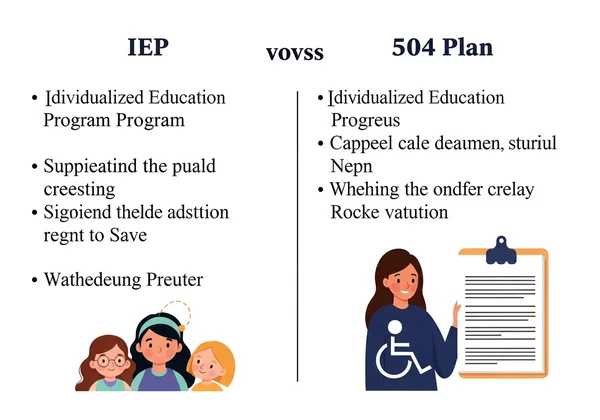
IEP vs. 504 Plan: Which is Right for Your Child?
Two of the most common support plans are the Individualized Education Program (IEP) and the 504 Plan.
-
An IEP (Individualized Education Program) is a legal document for students who require specialized instruction to make progress in the curriculum. It is governed by the Individuals with Disabilities Education Act (IDEA). If your child's autistic traits significantly impact their ability to learn alongside peers, an IEP provides modified goals, specialized teaching, and related services like speech or occupational therapy.
-
A 504 Plan is for students who do not need specialized instruction but require accommodations to access the general education curriculum. It is governed by Section 504 of the Rehabilitation Act. For a child with an Asperger's profile who is performing well academically but struggles with sensory overload or social anxiety, a 504 plan could provide accommodations like extended time on tests, preferential seating, or a quiet space to decompress.
The right plan depends entirely on your child's individual needs. Your advocacy binder and clear communication will help the school team make the best determination.
Implementing Accommodations That Support Learning at Home
Support doesn't end when the school bell rings. Creating a supportive and predictable home environment is just as important. The strategies you use at home can reinforce what happens at school and help your child feel secure and understood.
Consider these simple but effective accommodations:
- Visual Schedules: Create a daily or weekly schedule with pictures or words to help your child know what to expect.
- Sensory-Friendly Spaces: Designate a quiet corner in your home where your child can retreat when feeling overwhelmed. This space could have soft lighting, comfortable blankets, and calming sensory tools.
- Clear and Concrete Communication: Avoid sarcasm, idioms, or vague instructions. Be direct and precise in your language.
- Predictable Routines: Consistency is comforting. Stick to regular times for meals, homework, and bedtime as much as possible.
These small adjustments can make a world of difference in your child's ability to manage stress and regulate their emotions.
Looking Ahead to Next Steps
Your child's Asperger's test results are not a destination but a starting point on their unique journey. This new information is a powerful tool for understanding and advocacy. By decoding the results, recognizing their strengths, and working collaboratively with their school, you are building the foundation for your child's success and happiness.
Remember, every child's path is different. What works for one child may need adjustment for another. The most important thing is to stay curious, patient, and focused on your child's well-being. You are their greatest advocate and most important source of support. The journey ahead involves learning and growth—for both you and your child.
If you are ready to take that first step or want to gain deeper, AI-driven insights into your child's specific traits, our platform is here to help. You can start your test today, completely anonymously, and receive a comprehensive report that can guide your next steps.

Frequently Asked Questions About Asperger's Test Results for Children
What do the different score ranges mean on my child's Asperger's test?
Score ranges on a screening test like the AQ indicate the likelihood of having significant autistic traits. A low score suggests few traits, a mid-range score suggests some traits, and a high score suggests a strong presence of traits that may warrant a formal evaluation. However, the score itself is not a diagnosis. Instead, use it as a starting point for conversations with healthcare professionals.
How can I tell if my child needs a formal diagnosis beyond the screening test?
If the screening test results indicate a high level of traits, and you observe that these traits significantly impact your child's daily life—academically, socially, or emotionally—it is a strong sign to seek a formal diagnosis. A formal evaluation by a qualified professional (like a developmental pediatrician or psychologist) is the only way to get a definitive diagnosis. Our online screening tool is a helpful first step in this process.
What accommodations should I request at school based on these test results?
The accommodations you request should be directly linked to your child's specific challenges. If they have sensory sensitivities, request things like noise-canceling headphones or preferential seating away from distractions. If they struggle with social understanding, ask for social skills groups or explicit instruction on social cues. For executive functioning challenges, request visual aids, checklists, and extended time for assignments.
How do I talk to my child about their Asperger's test results in an age-appropriate way?
Focus on a positive, strengths-based approach. For a younger child, you might say, "Your brain works in a really cool and special way. It's great at focusing on things you love, but sometimes noisy places can feel like too much." For a teen, you can be more direct. Explain that the results help clarify why some social situations feel tricky and why they have such deep knowledge about their interests. Frame it as a tool for self-understanding, not as something "wrong" with them.