Asperger's Test & Love: Navigating Neurodiversity in Relationships
Do you ever feel like you and your partner are speaking different languages? One of you values direct, literal communication, while the other relies on subtle cues and unspoken understanding. These communication gaps can be frustrating, but they might not be about a lack of love. Instead, they could be a sign of neurodiversity in your relationship.
Asperger's traits can shape romantic connections in unique ways. Understanding them is your first step to a stronger, more empathetic bond. This isn't about flaws. It's about appreciating how you both connect. It’s about learning to appreciate different ways of thinking and loving.
This article will explore the dynamics of Asperger's in love, from dating to long-term partnerships. We will offer insights, challenge common stereotypes, and provide practical support. For many, the path to better understanding begins with self-knowledge. A confidential online screening is a valuable tool. It can help you gain some clarity on your own traits and how they influence your relationships.
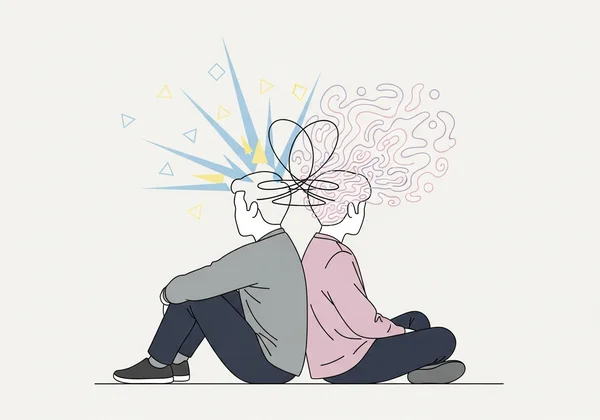
Understanding Asperger's Traits in Romantic Relationships
Neurodiversity simply means that human brains have natural variations. Asperger's syndrome, now considered part of the Autism Spectrum (ASD), represents one of these variations. In a relationship, these differences can be a source of both unique strengths and specific challenges. Understanding the core traits is essential for navigating your connection with compassion.
Common Asperger's Traits & Their Impact on Communication
Communication is often the area where differences first become apparent. Someone with Asperger's traits might communicate in a way that seems unusual to a neurotypical partner, but it's guided by its own internal logic.
- Direct and Literal Style: Individuals with Asperger's often say exactly what they mean. They may not use sarcasm, hints, or idioms, and they might struggle to interpret them from others. This honesty can be incredibly refreshing, but it can also be mistaken for bluntness if a partner is expecting more indirect communication.
- Challenges with Unspoken Rules: Many social interactions are governed by unwritten rules. For a person with Asperger's, these rules can feel arbitrary and confusing. This can lead to misunderstandings in social settings or during conversations where a partner expects them to "read between the lines."
- Processing Time: It can sometimes take longer to process social information or emotional conversations. A partner might need a moment of silence to think before responding. This isn't a sign of disinterest but rather a need for thoughtful processing.
Beyond Stereotypes: Empathy, Logic, and Unique Strengths
One of the most persistent myths about Asperger's is a supposed lack of empathy. This is a profound misunderstanding. Empathy is complex, and it can be expressed in different ways. Many people with Asperger's feel deep compassion for their partners; they just might not show it in conventional ways.
Instead of a lack of feeling, the difference often lies in how empathy is processed and expressed. It may be more logical than intuitive. Rather than offering a simple hug, they might try to solve the problem that is causing distress. This is an act of love, driven by a desire to help.
Furthermore, individuals with Asperger's bring incredible strengths to a relationship:
-
Deep Loyalty and Honesty: They are often incredibly dependable and committed partners.
-
Intense Focus: When they are interested in a person or a shared hobby, their focus is deep and passionate.
-
Logical Problem-Solving: They can provide a calm, rational perspective during stressful situations.
-
Unique Perspective: They see the world from a different angle, which can make life endlessly interesting.
Dating with Asperger's: From First Dates to Lasting Bonds
The dating world can feel like a minefield of unspoken rules and social expectations, which can be especially challenging for someone with Asperger's traits. However, with self-awareness and the right strategies, it is entirely possible to build authentic and lasting connections.
Navigating Social Cues and Expectations in Dating
First dates are often built around small talk and reading subtle body language—skills that may not come naturally. This can cause significant anxiety. The key is to create dating situations that play to your strengths rather than your weaknesses.
Consider planning dates around a shared activity, like visiting a museum, going for a hike, or playing a board game. This provides a natural focus for conversation and takes the pressure off maintaining constant eye contact or interpreting ambiguous social cues. It’s also okay to be upfront about your communication style. A simple statement like, "I'm a bit direct, so please know I always mean well," can prevent future misunderstandings.
Building Authentic Connections and Mutual Understanding
The goal of dating isn't to pretend to be someone you're not; it's to find someone who appreciates you for who you are. Authenticity is your greatest asset. Don't be afraid to talk about your passions, even if they seem niche. The right person will find your deep knowledge and enthusiasm captivating.
Building mutual understanding requires clear communication from both sides. It means asking for what you need and listening to your partner's needs in return. This foundation of honesty is crucial for any successful long-term relationship. Gaining a clearer picture of your own neurological profile can be a powerful step in this process, as understanding yourself better allows you to explain your needs more effectively to a potential partner.
Supporting Your Partner & Strengthening Neurodiverse Couples
A successful neurodiverse relationship is a partnership built on mutual respect, patience, and a willingness to learn from each other. It’s about creating a shared world where both partners feel safe, understood, and valued. The focus should be on collaboration, not trying to "fix" one another.
Effective Communication Strategies for Both Partners
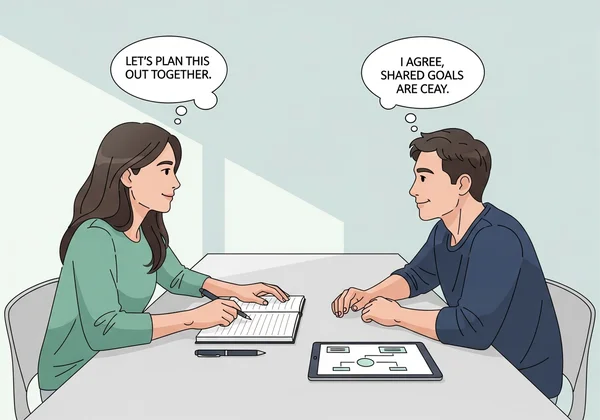
Clear, kind, and explicit communication is the bedrock of a strong neurodiverse couple. Misunderstandings are not a sign of failure but an opportunity to improve your shared language.
Here are a few strategies that can help:
-
Be Direct and Avoid Ambiguity: Say what you mean clearly and kindly. Avoid relying on hints, sarcasm, or passive-aggressive comments.
-
Ask for Clarification: If you're unsure what your partner means, ask! A simple, "Can you explain that in a different way?" can prevent a major argument.
-
Schedule Regular Check-ins: Set aside dedicated time to talk about your relationship without distractions. This ensures important topics are discussed thoughtfully.
-
Write Things Down: For complex or emotional topics, communicating via text or email can give both partners time to process and articulate their thoughts carefully.
Embracing Differences: Sensory Sensitivities & Shared Interests
Recognizing and respecting each other's needs is crucial. For example, a person with Asperger's may have sensory sensitivities, finding bright lights, loud noises, or certain textures overwhelming. A loving partner can support them by choosing a quieter restaurant, dimming the lights at home, or understanding their need for alone time to decompress after a stimulating event.
At the same time, embracing differences means celebrating unique strengths. The deep, focused interests common in Asperger's can become a wonderful source of connection. Whether it's a passion for history, astronomy, or a specific film genre, sharing in these interests can create powerful bonds and lead to exciting adventures together.
Discovering More: The Value of an Online Asperger's Test
If you see yourself or your relationship in these descriptions, you might be wondering what to do next. Knowledge is power. An online Asperger's test is not a medical diagnosis, but it is a powerful, private, and insightful first step toward self-understanding.
How a Self-Assessment Can Empower Your Relationship Journey
Taking a well-designed online screening can feel like turning on a light in a dark room. It can help you:
- Reframe Challenges: What you once saw as a personal failing (e.g., "Why can't I understand social cues?") can be reframed as a neurological difference. This reduces self-criticism and builds self-compassion.
- Gain a Vocabulary: The results can give you the words to explain your experiences to your partner, fostering empathy and teamwork.
- Identify Strengths: A good assessment will highlight your unique strengths, helping you and your partner appreciate the positive qualities you bring to the relationship.
This newfound clarity can transform your relationship dynamic from one of confusion to one of collaborative understanding. It’s a way to start your journey toward a more conscious and connected partnership.
What Our AI-Powered Report Offers for You and Your Partner
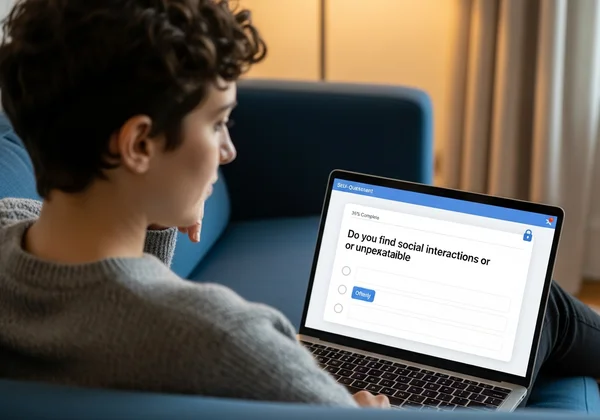
Not all online tests are created equal. Our platform is based on established scientific scales like the AQ and RAADS-R, and you can try it anonymously. The process is completely anonymous—no registration or email is required.
After completing the questionnaire, you have the option to unlock a detailed, AI-powered analysis report. This goes far beyond a simple score. It provides personalized insights into your unique traits, explaining how they might manifest in your daily life and relationships. The report spotlights your strengths and challenges. It offers actionable suggestions. Use it as a starting point for discussions and growth.
Empowering Your Neurodiverse Love Story with Understanding
Every love story is unique, and a neurodiverse relationship is no exception. It is a journey that requires patience, communication, and a deep commitment to understanding each other’s worlds. The challenges are real, but so are the extraordinary rewards: a partnership built on radical honesty, deep loyalty, and a truly authentic connection.
Recognizing Asperger's traits is not about placing a label; it's about gaining a user manual for yourself and your relationship. It empowers you to navigate conflicts with more grace, celebrate your differences, and build a love that honors who you both truly are.
Ready to take the first step toward deeper insight and a more empathetic connection? Take the free test today to explore your personal traits in a safe and confidential way.
Frequently Asked Questions About Asperger's and Relationships
Can I test myself for Asperger's to understand my relationship dynamics?
Yes, a self-assessment is an excellent starting point. While not a formal diagnosis, it can provide invaluable insights into your own patterns of thinking and behavior. This confidential test can help you identify traits that may be influencing your communication style and social needs, giving you a framework for discussing them with your partner.
What are common challenges in undiagnosed Asperger's relationships?
Communication misunderstandings cause common challenges. One partner feels unheard or disconnected. The other feels criticized for missing unspoken rules. This can lead to cycles of arguments over social plans, household routines, or expressions of affection, all because both partners are operating from different neurological blueprints.
How do I get tested for Asperger's syndrome for relationship insights?
An online screening is a private and accessible first step. The tool at Aspergerstest.me is based on scientific research and provides a detailed overview. If the results resonate with you, the next step would be to seek a formal diagnostic assessment from a qualified professional, such as a psychologist or psychiatrist who specializes in adult autism. Our report can be a valuable document to bring to that appointment.
Do people with Asperger's truly lack empathy in romantic connections?
No, this is a common and harmful stereotype. People with Asperger's are fully capable of deep love, care, and empathy. However, they may process and express it differently. Their empathy might be more cognitive (understanding a problem and wanting to fix it) than affective (instinctively mirroring another's emotions). It’s a difference in style, not a deficit in feeling.